













Geleidbaarheid 4-20mA zender met Wifi




305,00 € exclusief BTW
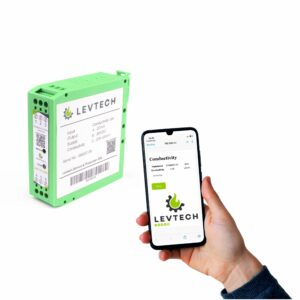
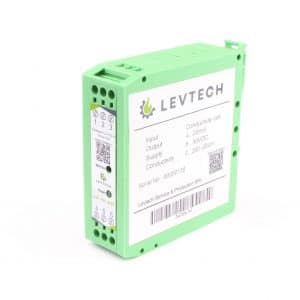
Onze geleidbaarheidstransmitter meet de geleidbaarheid van vloeistoffen met elke standaard resistieve geleidbaarheidssensor met 2 elektroden. Deze transmitter is een meetapparaat dat de weerstand tussen de geleidbaarheidssensorcellen meet en de gemeten waarde omzet in een lineair 4-20mA analoog signaal dat op een PLC kan worden aangesloten. De nauwkeurigheid van de meting is sterk afhankelijk van de kwaliteit van de sensor.
Levering binnen 2-3 dagen binnen de EU en 7-10 dagen wereldwijd
*Leveringsdatums kunnen veranderen afhankelijk van de hoeveelheid en het afleveradres.
Alle bestellingen worden geleverd door DHL 
Geniet van gratis wereldwijde verzending voor bestellingen van meer dan 500 EUR
98 op voorraad
Over dit apparaat
Deze geleidbaarheidstransmitter meet de elektrische weerstand van een oplossing met behulp van een sensor met elektroden, zet deze weerstand om in een geleidbaarheidswaarde en verzendt deze waarde vervolgens voor bewakings- en controledoeleinden.
Een korte uitleg over hoe geleidbaarheidsmeting en de zender werken:
Sensor
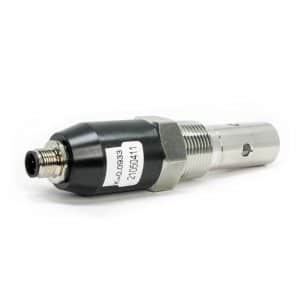
De zender heeft een geleidbaarheidssensor nodig, die meestal uit twee of vier elektroden bestaat. Deze elektroden zijn gemaakt van materialen die goed elektriciteit geleiden, vaak roestvrij staal. De nauwkeurigheid van deze geleidbaarheidsmetingen hangt sterk af van de kwaliteit van de geleidbaarheidssensor. Hoewel onze geleidbaarheidszender gekoppeld kan worden met elke geleidbaarheidsensor, raden we altijd aan om onze hoogwaardige sensoren te gebruiken om de beste resultaten te verkrijgen.
.
Meetprincipe
Wanneer de sensor in een oplossing wordt ondergedompeld, beïnvloedt de geleidbaarheid van de oplossing de elektrische weerstand tussen de elektroden. Oplossingen met hogere ionenconcentraties (hogere geleidbaarheid) laten elektrische stroom gemakkelijker door tussen de elektroden, wat resulteert in een lagere weerstand. Als we de geleidbaarheidssensor bijvoorbeeld onderdompelen in zout water, een goede geleider, dan registreert hij een hoge geleidbaarheid door de moeiteloze stroom tussen de elektroden. Wanneer de sensor daarentegen in gezuiverd water wordt geplaatst, dat geen goede geleidende eigenschappen heeft, registreert de zender een lage geleidbaarheid van het water.
Excitatiesignaal
De zender genereert een wisselend sinusoïdaal stroomsignaal (AC) dat wordt toegepast op de elektroden van de sensor. Dit excitatiesignaal induceert een klein elektrisch veld in de oplossing rond de elektroden. Op het wifi-model kun je de frequentie van het excitatiesignaal wijzigen.
Detectie van spanningsdaling
De zender meet de spanningsval over de elektroden veroorzaakt door de stroom die door de oplossing loopt. Deze spanningsval is evenredig met de geleidbaarheid van de oplossing. Een oplossing met een hogere geleidbaarheid heeft een lagere spanningsval en omgekeerd.
Kalibratie en compensatie
Om de spanningsval om te zetten in een betekenisvolle geleidbaarheidswaarde, wordt de zender vaak gekalibreerd met oplossingen met een bekende geleidbaarheidswaarde. Geleidbaarheid wordt ook beïnvloed door temperatuur. We hebben nog een product die de geleidbaarheidswaarde kan compenseren op basis van de vloeistoftemperatuur.
Transmissie
Zodra de zender de geleidbaarheidswaarde heeft berekend, kan hij deze gegevens doorsturen naar een regelsysteem, datalogger of andere controleapparaten met behulp van een analoge 4-20mA uitgang.
Onderhoud en reiniging
Het is belangrijk om de geleidbaarheidssensor regelmatig schoon te maken en te onderhouden, omdat de ophoping van aanslag of verontreinigingen op de elektroden de nauwkeurigheid van de metingen kan beïnvloeden. De zender heeft geen onderhoud nodig.
Variaties
Kies uit ons assortiment het product dat het beste bij je behoeften past. Onze geleidbaarheidstransmitters zijn verkrijgbaar in 2 versies: LSP-TSC en LSP TSC-WIFI Met de WiFi-versie kan de gebruiker verbinding maken en de parameters wijzigen. Het apparaat heeft een ingebouwde webinterface die toegankelijk is vanaf een telefoon, tablet of laptop met WiFi-verbinding. Er is geen applicatie of extra software nodig, je hebt toegang tot het menu via je internetbrowser. .

In de versie zonder wifi is er geen mogelijkheid om achteraf parameters te wijzigen. Tijdens de bestelling moet je de gewenste parameters doorgeven, die bij de productie zullen worden verstrekt.
Toepassingen
- Waterbehandeling: bewaking van de geleidbaarheid van water in behandelings- en zuiveringsprocessen.
- Chemische verwerking: bewaking van de geleidbaarheid van chemicaliën in industriële processen, zodat u optimale procesomstandigheden kunt handhaven.
- Productie van voedingsmiddelen en dranken: met de bijbehorende sensor kan de geleidbaarheid van vloeistoffen zoals melk, sap en bier worden gecontroleerd.
Geleidbaarheidstransmitters worden op grote schaal gebruikt in waterbehandelingsinstallaties. In dergelijke systemen worden de metingen van de geleidbaarheid van het water verzameld door een centrale verwerkingseenheid (PLC) die het systeem bestuurt.
Opmerkelijke functies
• Compensatie kabelcapaciteit
• 4 tot 20 mA analoge signaaluitgang
• TS-35 DIN-railmontage voor flexibele installatie
• Nauwkeurige meting van geleidbaarheid van vloeistof (+/-0,1% nauwkeurigheid)
• IP20 beschermende behuizing
• Schroefaansluitingen
• Elektrisch geïsoleerde ingang, uitgang en voeding voor veiligheid
• Voedings-LED
• Cyclische zelfkalibratie
• WiFi-module voor eenvoudige configuratie.
De geschikte geleidbaarheidssensor selecteren:
Als het gaat om het meten van de geleidbaarheid van water, is het essentieel om de juiste geleidbaarheidssensor te kiezen. Deze keuze is afhankelijk van inzicht in de details van uw project, zoals de verwachte geleidbaarheidsniveaus van het water, temperatuurschommelingen en de beoogde locatie van de sensor.
Een belangrijke factor bij het kiezen tussen sensoren is de celconstante of K-factor. Deze waarde beschrijft de geometrie van de sonde en geeft informatie over het soort vloeistoffen dat nauwkeurig gemeten kan worden.
Sensoren met een lage celconstante, die kleine afstanden tussen de geleideroppervlakken aangeven, zijn bijvoorbeeld ideaal voor het meten van zuiver en ultrazuiver water. Anderzijds zijn sensoren met een grotere celconstante, die grotere detectieoppervlakken bieden en meer vloeistof toelaten, geschikt voor vloeistoffen met een verwachte hogere geleidbaarheid dan zuiver water. Door rekening te houden met deze factoren kunt u met een gerust hart de juiste celconstante sonde kiezen voor uw waterbehandelingsbehoeften.
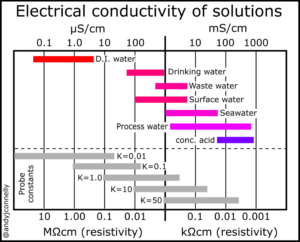
Voor een uitgebreidere en nauwkeurigere geleidbaarheidsmeting raden we onze Geleidbaarheids- en temperatuurtransmitter.
Video instellen
Laten we eens kijken naar deze korte video hieronder om te zien hoe we onze geleidbaarheidszender bedraden en instellen.

| Gewicht | 74 g |
|---|---|
| Afmetingen | 85 × 25 × 80 mm |
| Meetbereik | 0 tot 20000 uS/cm |
| Invoer | Geleidbaarheidssensor (weerstand 2 elektroden) |
| Uitgang | 4-20 mA |
| A/D-omzetter | 16bit |
| Voedingsspanning | 20 tot 30 VDC |
| Uitgangsweerstand | >75Ω |
| Materiaal behuizing | Polyamide |
| IP-classificatie | IP20 |
| Temperatuurcompensatie | Geen |
Enkel ingelogde klanten die dit product gekocht hebben, kunnen een beoordeling schrijven.
DOCUMENTATION
RECENT REVIEWS
Gerelateerde producten


Industriële communicatie
200,00 € exclusief BTW
Aanbieding!
Automatiseringsproducten
Oorspronkelijke prijs was: 92,00 €.62,00 €Huidige prijs is: 62,00 €. exclusief BTW
Levtech producten
65,00 € - 70,00 € exclusief BTW
Automatiseringsproducten
9,99 € exclusief BTW


Levtech producten
138,00 € - 153,00 € exclusief BTW
Aanbieding!
Nieuw
Stroomvoorziening
Oorspronkelijke prijs was: 120,00 €.40,00 €Huidige prijs is: 40,00 €. exclusief BTW
Levtech producten
69,00 € - 79,00 € exclusief BTW
Levtech producten
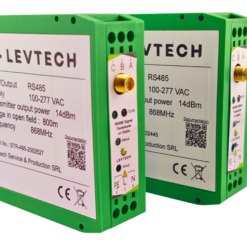
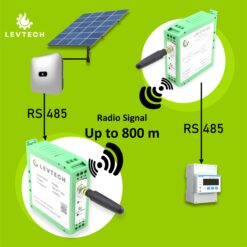
RS485 draadloze signaalzender voor Huawei Slimme Meter DTSU666 800 m
360,00 € exclusief BTW
Beoordelingen
Er zijn nog geen beoordelingen.